
Five Domains the FDA Wants You to Measure in PROs for Cancer—and Why Translation Affects All of Them
In a recent "LifeSci Talks" episode, TransPerfect Global Practice Leader Mark Wade and Signant Health VP and eCOA Scientist Bill Byrom PhD discussed how new FDA guidance is reshaping how sponsors approach patient-reported outcomes (PROs) in cancer clinical trials.
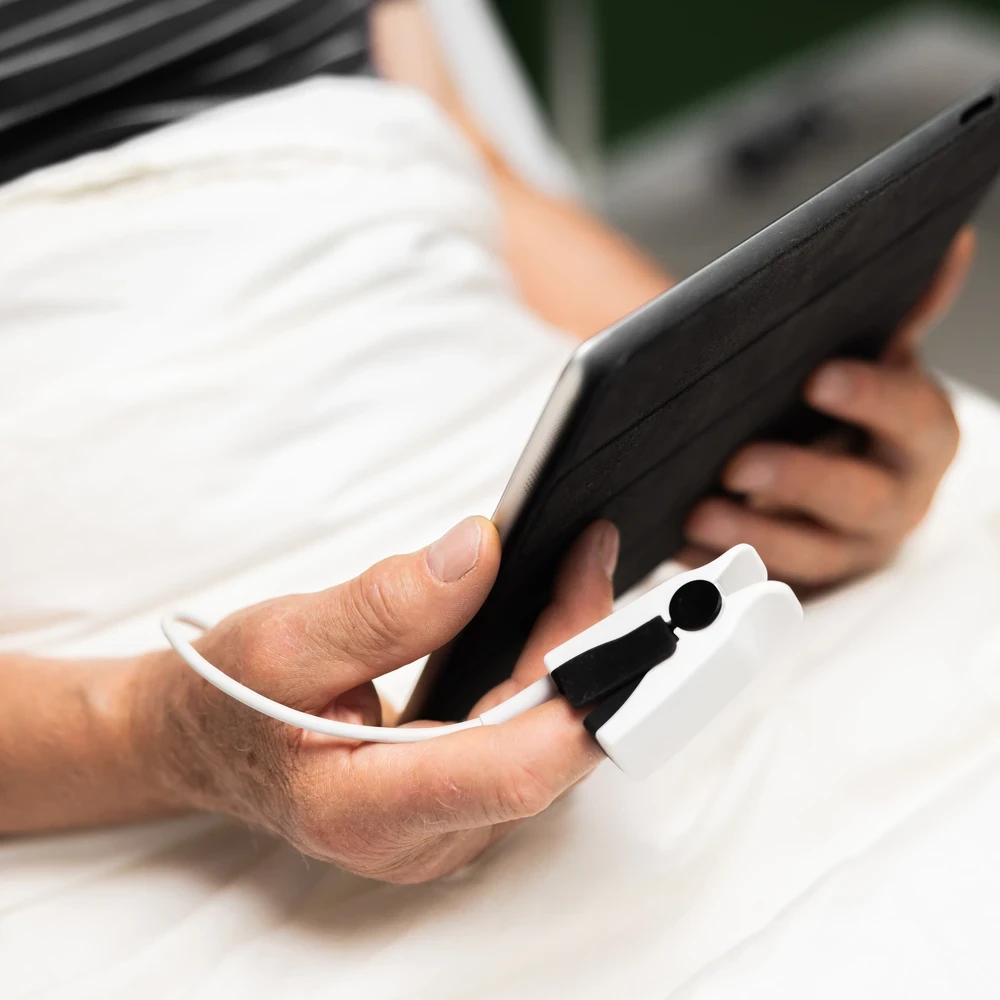
PROs are self-reported by patients and can be completed at the clinic or remotely (e.g., at home), often just before the patient begins a new treatment cycle. When assessments happen at this point, patients may actually be feeling relatively well—better than they have in weeks—which can lead them to underreport the true burden of cancer and treatment-related side effects on their daily lives.
As Byrom notes, “…You're asking them stuff about the effects of treatment and the toxic effects that they've been suffering, but at this point in time they're feeling better than they have for the last few weeks.”
Consequently, PROs have historically not been used in label claims and as primary endpoints.
Cancer Clinical Trials: Why Traditional PRO Collection Falls Short
Timing further complicates matters. Consider chemotherapy: a patient may feel relatively well before treatment begins, yet become decidedly sick and lethargic in the days that follow. If an oncology PRO assessment is captured before therapy, it will reflect a very different picture than data gathered after—potentially masking the true symptomatic burden. Recall-based assessments add another layer of complexity, as patients may misremember past symptoms or filter them through how they currently feel.
These and other factors make it difficult for regulators to rely on PRO data when evaluating new anti-cancer therapies.
New FDA Guidance
The FDA's new guidance document, Core Patient-Reported Outcomes in Cancer Clinical Trials, establishes a more targeted approach to measuring PROs in cancer trials.
It defines five core outcome domains and offers recommendations on instrument selection, assessment frequency, and trial design.
This signals a shift from broad and relatively infrequent data collection toward more frequent and decision-relevant measurement focusing on the parameters that matter most in regulatory evaluation.
What This Means for Sponsors
Between 2006 and 2020, only 7 of 155 oncology products that received initial FDA approval contained PRO data in the label—a striking illustration of how rarely patient-reported outcomes have been incorporated in US regulatory decisions, far fewer than in Europe.
This new FDA guidance raises the bar for how oncology PROs are selected, measured, and used in decision-making. Sponsors whose PRO strategies do not align with the guidance’s recommendations may find their data less likely to support labeling claims or contribute meaningfully to benefit/risk assessments.
For global trials, translation is required to ensure participants fully understand the item’s meaning. Linguistic validation (LV) is the methodology to ensure it’s done correctly. This translation process is specialized and involves many more steps than a traditional translation process; even the resources used are specialized. Thus, not all language service providers (LSPs) are actually equipped to perform such complex translations. Translation errors or inconsistencies across languages can introduce bias into PRO instruments—ultimately undermining PRO endpoint validity. Investing in translation and linguistic validation helps to ensure that PRO data is comparable and useful.
The Five Core Domains—and Why Translation Matters
Beyond defining the five core outcome domains (as established by the FDA’s guidance document), the FDA aims to address the limitations of traditional clinician-reported COAs (ClinRO) data collection by recommending more frequent patient-reported assessments, particularly for symptomatic adverse events (AEs) and physical function.
The guidance also underscores the importance of accounting for missing data and understanding the reasons behind incomplete assessments. As Byrom notes, "The lack of data is just as useful as the data itself…It can be quite informative."
With this framework in mind, let's look at the five core domains and their distinct localization considerations.
- Disease-Related Symptoms
The guidance recommends that where common cardinal disease symptoms exist, dedicated disease symptom scales should be used to measure them.
Symptom terminology can be translated incorrectly or inconsistently across languages and cultures, or even with nuances within the same language. Safeguarding conceptual equivalence during translation ensures that patients interpret and report symptoms consistently across regions.
- Symptomatic AEs
The guidance recommends selecting a concise set of the most important and/or high-frequency symptomatic AEs from an item library, with sponsors providing rationale for their selection based on mechanism of action, early clinical data, and input from patients and healthcare providers.
These scales must be translated precisely. Slight differences in translation can influence patients' interpretation, creating inconsistencies in reported outcomes across languages.
- Overall Side Effect Impact Summary Measure
The guidance recommends including a summary measure of the overall side effect impact to inform treatment tolerability. Because individual patients may weigh side effects differently, a single global impression of severity item is one option. An example of this could be something along the lines of, “Overall, how much have your side effects affected your daily life?”
These broad, subjective questions require culturally aware translation to support consistent interpretation. A skilled linguist can help preserve each question's intent, yielding reliable data in every language.
- Physical Function
Physical function measures a patient’s ability to perform basic physical activities (e.g., walking) and is a key indicator of independence and overall health. The guidance recommends selecting physical function scales that measure defined concepts and assess varying levels of ability to perform activities requiring physical effort.
Physical function instruments are designed to be globally applicable, but cultural differences must be carefully accounted for during the translation and linguistic validation process. Concepts mentioned within the instrument that may carry different connotations across cultures should be identified and addressed during adaptation, ensuring conceptual equivalence and data validity across regions.
- Role Function
Role function assesses a patient's ability to participate in everyday family, work, and social life. It's a key component of quality of life and may also provide insight into overall functioning.
Given cultural differences in expectations and how these roles are defined and experienced, careful linguistic and cultural adaptation is essential to ensure consistent interpretation and meaningful insights.
Streamlining PRO Translation with Item Banks
Item banks are gaining traction in multilingual instrument development. The FDA's guidance for the AE and "side effect impact" domains specifically mentions the use of an “item library” or “item bank.”
These repositories of pre-validated questions may enable faster, more reliable, and more cost-effective development of PRO instruments while supporting consistent localization across languages and trials. However, it needs to be noted that there are considerations when using a pre-existing repository. The assumption that they are dynamic, reusable assets is not entirely accurate.
Why Professional Translation Is Critical to PRO Success
The FDA's guidance makes it clear that reliability, validity, and comparability are the baseline expectations for PRO data.
PRO instruments are already scientifically validated and rigorously tested. Introducing language variants, therefore, demands an equally rigorous translation process. This is well established in the ISPOR guidelines, which set out robust translation and linguistic validation standards specifically designed to preserve the integrity of PRO instruments across languages.
PRO data relies almost exclusively on the patients’ interpretation of the questions. In global trials, poor translation can introduce a falsehood to the integrity of the original instrument. This can create a disconnect between the patient's experience and what the original developers intended to capture.
Because every item depends on consistent, comparable responses across populations, professional translation and cultural adaptation are not optional steps, but rather, they are essential to data integrity. Without this rigor, even well-designed instruments risk generating data that falls short of regulatory expectations for reliability and comparability.
Interested in learning more?
The FDA's guidance is already influencing how sponsors design their PRO strategies for upcoming submissions, ensuring more specific, frequent, and patient-centric measurement approaches to improve data quality. This article reflects key themes discussed in the podcast LifeSci Talks: Considerations and Opportunities in Capturing Oncology Patients' PRO Data. Watch the full episode to hear Mark Wade and Bill Byrom walk through how to audit your current instruments for localization gaps, what "frequent assessment" actually looks like in practice, and where sponsors are most commonly falling short.
This content draws directly on language and recommendations from the FDA's guidance document "Core Patient-Reported Outcomes in Cancer Clinical Trials" (October 2024), published by the Oncology Center of Excellence, CDER, and CBER. Portions of the descriptions across the core PRO domains reflect language adapted from that guidance. The full document is available at fda.gov.