









See Website Localization Simplified
Watch this quick demo to learn how fast and easy it is to use the features of GlobalLink Web to localize your website.
Faster multilingual websites. Compliant updates. Less rework. More patients.
Get in Touch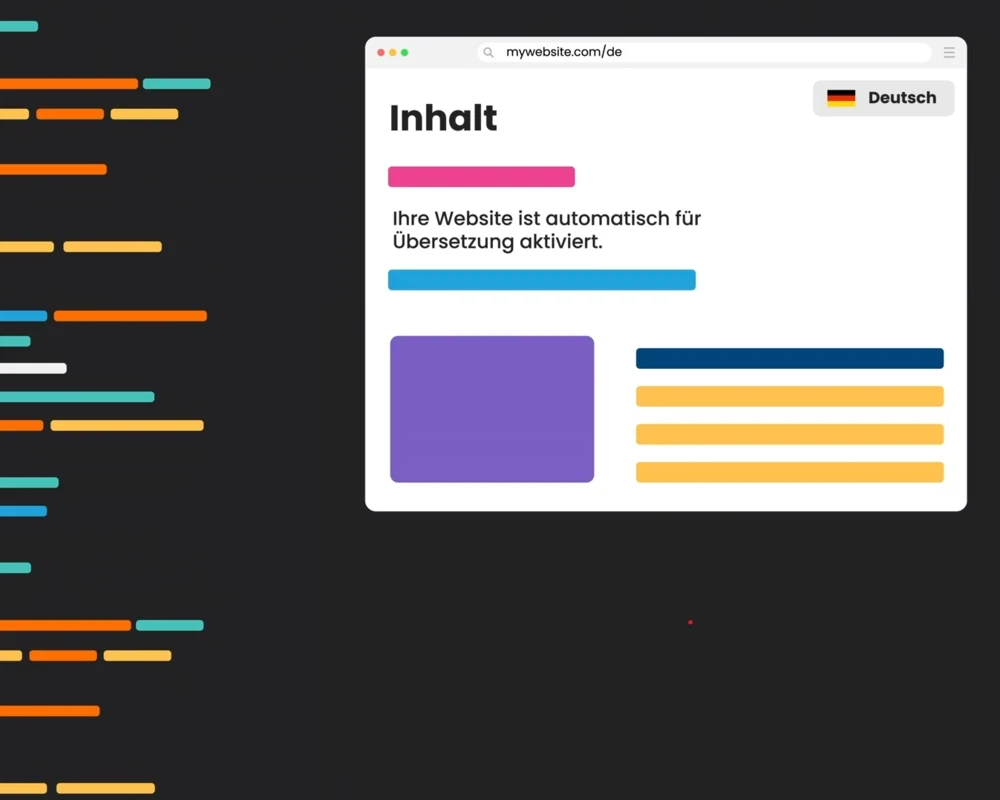
GlobalLink Web is a flexible website localization solution for fast, secure, and compliant multilingual website deployment that supports human, AI, and hybrid workflows with built-in SEO optimization. Updates made to the source site automatically propagate across all localized sites, making multilingual site maintenance simple.
Easy, risk-free implementation
Deploy with a single line of code. No backend integration, CMS plugin, or IT dependency required, making it fast to launch and safe to scale.
Faster & more diverse patient recruitment
Culturally adapted trial websites reach more participants globally and reduce drop-off and screen failures by improving understanding.
200+ languages
Scale trial-site localization up or down as needed, powered by TransPerfect’s team of specialized linguists with extensive experience in localizing websites for clinical trials and other life sciences content.
Compliance with flexible governance
GlobalLink Web gives you as much control as you want or takes on as much responsibility as you need. Customizable review and approval workflows, audit trails, and version control ensure regional regulatory requirements are met.
On-page editing
Reduce errors and rework by previewing localized content before publication.
Time & resource savings
Purpose-built AI and translation memory, backed by an experienced team of clinical trial translation experts, streamline workflows and reduce rework.
Translation memory
Ensure consistency and reduce costs by reusing approved translations through centralized translation memory integrated directly into the front-end delivery process.
Rapid website launch in multiple languages
A single line of JavaScript and a straightforward interface enable localized website launches almost instantly.
Comprehensive & cost-effective localization
Automated content capture ensures all relevant material is localized, while workflows and pricing are built to match any needs.
Region-specific SEO
Support for hreflang tags, meta descriptions, and dynamic content flattening ensures localized sites are optimized for search engines.
Organizations conducting clinical trials rely on websites to connect with patients, sites, and global audiences. In this downloadable playbook, learn more about effective web localization can drive success for your clinical trial.
Watch this quick demo to learn how fast and easy it is to use the features of GlobalLink Web to localize your website.
What is GlobalLink Web?
GlobalLink Web is a turnkey, JavaScript-based website localization solution that delivers fully translated website experiences to global markets. It’s available as a self-serve, hybrid, or fully managed solution backed by dedicated support teams around the globe. Click here to learn more about how GlobalLink Web works.
How does GlobalLink Web help clinical trial teams?
GlobalLink Web helps clinical trial teams quickly publish and maintain multilingual websites without losing control of approvals, version history, or governance. The solution is ideal for clinical teams managing websites that benefit from global reach, including clinical trial recruitment, careers, pharmaceutical products, and more. It requires minimal setup and eliminates the need for integration, content submission, and manual publishing.
Why choose a localization solution supported by specialized linguists with life sciences experience?
Because clinical content isn’t generic marketing copy. A life sciences-experienced partner understands regulated review, medically sensitive language, country workflows, and the operational reality of trials. This means less time spent correcting preventable errors and more time delivering compliant, patient-ready content.
What types of websites does GlobalLink Web support?
GlobalLink Web can be used to localize any type of website. For pharmaceutical, biotechnology, and other life science organizations, it’s most commonly used for trial recruitment websites, trial listing pages, country and affiliate trial pages, patient education pages tied to a study, and supporting microsites that need frequent updates.
How fast can we go live in multiple languages?
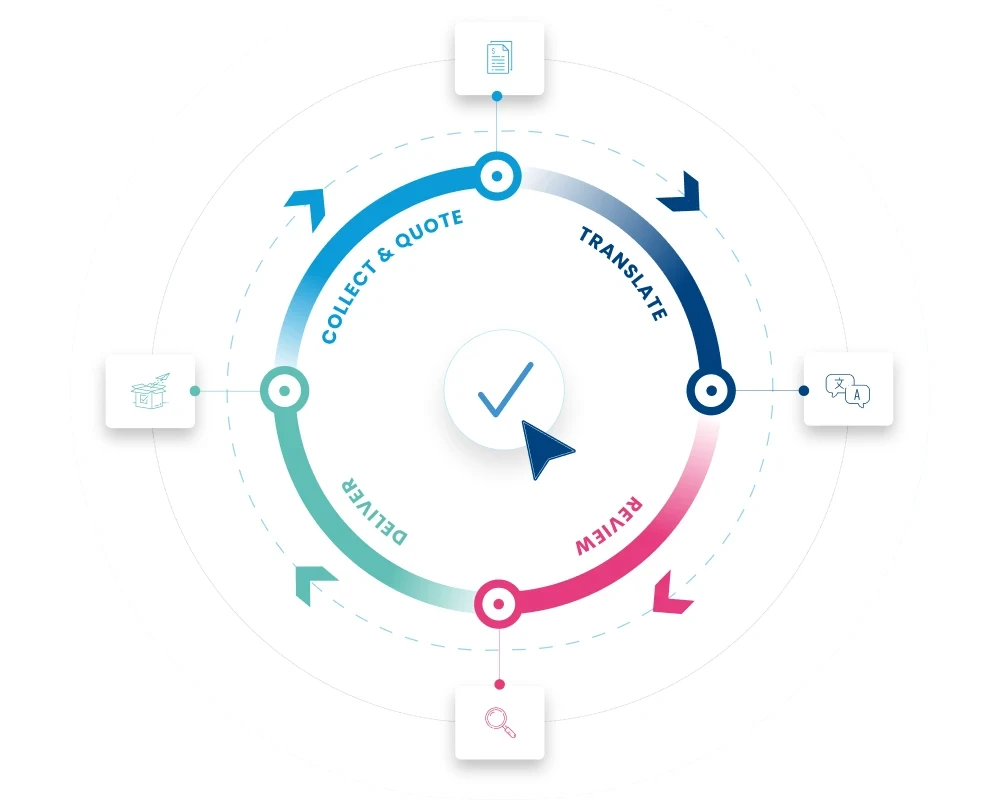
Translation and localization can happen almost instantly if using advanced AI-powered solutions, or approaches involving human expertise can be tailored to maximize efficiency and quality output. Overall publication speed depends on your site’s complexity, number of languages, and review requirements. The goal is to reduce manual handoffs by automating “detect → translate → review → publish” so updates move swiftly and predictably. To discuss which plan and workflow best fit your needs, contact a sales representative.
Does GlobalLink Web have human translators?
Yes! In addition to purpose-developed AI and translation memory, GlobalLink Web is backed by a team of specialized linguists with extensive experience in localizing websites for clinical trials and other areas of life sciences.
Can we support different content by country (not just translation)?
Yes, many trials require country-specific variants (availability, contact routes, legal copy). GlobalLink Web workflows can be customized to support localized variants with the right review gates.
Does GlobalLink Web support right-to-left and other directional languages?
Absolutely! With 200+ languages, GlobalLink Web supports any right-to-left and other directional languages. A key feature is the ability to adjust localized page formatting to accommodate non-left-to-right languages and any other layout updates stemming from changes in language.
How can I request a consultation or quote for website localization?
To learn more about how GlobalLink Web can fit your localization workflow and needs, contact a sales representative.
How does localization help with clinical trial transparency and disclosure needs?
Website localization helps ensure patient-facing trial information is accessible and consistent across regions, and that updates are controlled and traceable, thereby reducing the risk of outdated or conflicting public content.
Does localization introduce compliance risk?
It can, if teams rely on unmanaged copy-and-paste workflows, slow email-based reviews, or inconsistent terminology. A controlled workflow with approved terminology, review steps, versioning, and experienced support reduces the risk of mismatched claims, outdated content, or country inconsistencies.
Can we maintain an audit trail for updates to patient-facing content?
Yes! GlobalLink Web is designed with version control and keeps track of changes (who changed what and when) to maintain traceability around content changes and localization actions. This helps teams support inspection readiness and internal governance.
How do you support regulated review and approvals?
Review and approval workflows can be customized based on your organization’s needs and requirements. Using GlobalLink Web, you can route translations to the right stakeholders (medical, legal, regulatory, country reviewers) with role-based steps and tracked approvals, so you can show who approved what and when.
How do you handle medical terminology and consistency across countries?
By applying approved terminology management tools, including glossaries, translation memory, and style guidance. This ensures key terms (endpoints, inclusion criteria language, risk statements) stay consistent and medically appropriate across languages and updates.
Can we align translations to local expectations without “changing the science”?
Yes. You can use controlled language and approved terminology for scientific accuracy, and apply transcreation only where appropriate (headlines, CTA buttons, patient-friendly phrasing), with guardrails and reviewer oversight.
Are sites localized with GlobalLink Web secure?
Yes, GlobalLink Web utilizes the web browser's APIs and functions according to the browser's conventions to protect personally identifiable information (PII). For other instances of PII that do not have inherent protection via the browser, GlobalLink Web content capture can be customized to include or exclude any sensitive text. PII, such as a name or address, may be flagged as non-translatable with a simple HTML class, ensuring it isn’t captured at any point for translation. Additionally, the translation API is securely hosted in the Amazon Web Services (AWS) cloud. AWS uses an industry-standard AES-256 encryption algorithm for data and metadata at rest and an AWS Key Management Service for data in transit. For additional information on the security of GlobalLink Web, click here.
How do you support privacy requirements across regions?
GlobalLink Web workflows are customizable to help teams control what content is processed, who can access it, and how approvals are documented. For region-specific privacy and legal requirements, you can implement country-specific review gates and publishing rules.
Can we exclude participant-entered data from translation workflows?
Yes! Teams typically exclude form fields and participant-entered data so only approved site content is localized (not user submissions).
What about consent and sensitive language (e.g., risk, compensation, privacy notices)?
You can lock down high-risk content with stricter review steps, require designated approvers, and maintain version history so you don’t accidentally publish outdated or unapproved language.
How do you ensure translations are accurate and patient-appropriate?
Quality is built through validated linguists, domain expertise, terminology control, contextual review (seeing text in its on-page context), and customizable medical and country-level approvals for sensitive content.
Can our internal medical reviewers make edits directly?
Yes, you can set up a process so that reviewers can review and approve within the workflow instead of marking up screenshots and emailing changes back and forth.
How do you handle abbreviations, reading level, and health literacy?
You can set language style guidance and apply patient-friendly rules (where appropriate) while keeping scientific meaning intact, which is especially important for recruitment copy and FAQs.
How does localization work when a CRO or vendor manages the site?
With GlobalLink Web, you can set up shared workflows where the sponsor maintains governance (approvals, terminology, audit trail), while a CRO or vendor executes day-to-day updates, without losing visibility or control.
Can different countries review only their language content?
Yes, country reviewers can be assigned to specific languages and regions so they only see what they need, reducing bottlenecks and review fatigue.
How do you prevent “version drift” across languages?
By tying translations to source updates and tracking what’s pending, approved, or published in each language. This makes it easy to identify gaps before they become compliance or enrollment issues.
Can I use GlobalLink Web with private web pages (e.g., pages behind a login)?
Yes, GlobalLink Web has a range of options and deployment methods that are suitable for users who want to have localized web pages behind a login.
Will localized sites be optimized and show up in search?
They certainly can. A proper multilingual setup supports discoverability by search engines in local languages (e.g., correct language targeting and page relationships). The key is implementing multilingual SEO best practices during publishing, not after the fact. We recommend offering search engine bots a flattened, rendered version of the web pages. GlobalLink Web includes a "flattening service" that provides an appropriate version of the translated HTML page.
Do you support multilingual SEO structures (like language targeting and localized URLs)?
Yes! Teams commonly support language versions, localized navigation, and page-level structures that help search engines understand which language and country pages to show. There are several ways to deploy GlobalLink Web into a website, and each method will impact SEO differently. One of the most popular and functional methods of deploying the localized site involves selecting a distinct subdomain or subdirectory per language. Using a domain provides a unique URL for each language, visible to users and bots. This method positively impacts SEO because the domain can reflect the in-language content. However, there are also supported options for GlobalLink Web deployment using folders (directories), query strings, and cookies. Learn more about GlobalLink Web deployment strategies.
How do you handle frequent updates without breaking localized pages?
GlobalLink Web instantly detects published content changes and reprocesses only what changed, so translations stay in sync without rebuilding every language version manually.
Which CMS platforms can it work with?
GlobalLink Web’s unique approach manages content in the browser, making it CMS-agnostic, so that it operates independently of your CMS or backend system. In addition, GlobalLink Web can be deployed alongside common CMS and web stacks. If you’re on a custom build, the focus is usually on integration method (connector vs. API/export) and publishing workflow. To learn more, contact a sales representative.
Do we need to rebuild our site to use it?
No, GlobalLink Web integrates into existing website workflows and adds localization automation and governance by using a single line of JavaScript code.
How are changes captured? Do we have to manually submit pages?
No manual content or page submission is required. Change management will vary depending on workflow and approval governance. Typically, when new content is added to the origin site, such as a new study or a content change, GlobalLink Web runs through its localization cycle. The source page with the latest content is built, and GlobalLink Web can display the same page but with localized equivalents. GlobalLink Web syncs all the content on the origin site with the target languages so that any change to the origin site will cascade into all target languages. Only the origin site needs maintenance, and GlobalLink Web will take care of the rest.
What about dynamic content (filters, search, trial listings, and structured data)?
Dynamic or structured elements can be handled seamlessly, but the approach varies by site architecture. The practical goal is to localize the patient-visible strings while protecting functional logic and structured fields. Contact our technical experts for more detail.
How are localized sites served to end users?
With the addition of a language selector on the site, users can navigate to the available languages. The end user’s browser requests localized content from GlobalLink Web's cloud-based translation endpoints. That content is then retrieved and rendered on the page using human or AI-based translations. GlobalLink Web logic optimizes performance and dynamically delivers localized content.
What impact will GlobalLink Web have on site speed and end-user performance?
GlobalLink Web uses a pre-translation JSON object to store previously translated text in a cache to minimize the amount of content that needs to be fetched “real-time” via translation APIs. This helps prevent reductions in site speed and end-user performance.
How much technical knowledge is required to use GlobalLink Web?
Very little! The amount of technical knowledge required will vary based on the deployment method and desired level of governance. However, the use of GlobalLink Web can be as simple as injecting a single line of JavaScript code into your website and selecting the language for translation.
How do I install the JavaScript snippet?
Simply add the snippet to the head of the website to be localized. For instructions on how to inject the JavaScript code, click here.
Has the GlobalLink Web JavaScript code been tested on different browsers?
Yes! GlobalLink Web is supported for all major desktop and mobile internet browsers, including Chrome, Edge, Firefox, and Safari. For a complete list of compatible browsers, click here.